Posts

Class 2- Exploring the features of information text

Image
In this engaging and hands-on language activity, students will explore the key features of information texts by writing their own simple recipes. Through this task, they will understand the structure and purpose of instructional writing while practicing the use of sequencing words (such as first, then, next, finally) and command verbs (like chop, mix, pour, bake). Students began observing and analyzing sample recipes to identify common elements such as titles, ingredients lists, step-by-step instructions, and formatting. As a class discussion, we highlighted how these texts are written clearly and in a logical order to give instructions. Next, students chose a dish or snack they are familiar with (e.g., making a sandwich, lemonade, or fruit salad) and wrote their own recipe, including: A title for their recipe A list of ingredients with quantities Step-by-step instructions using sequencing words and command verbs div class="separator" style="clear: both; text-alig...

Class 1- Oi and Oy words

Image
In this engaging phonics activity, students explored words containing the vowel digraphs “oi” and “oy” through an interactive flashcard session. The teacher introduced the sounds by first discussing how both “oi” and “oy” make the same sound /ɔɪ/ (as in coin and boy), but are used in different positions within a word. Children were then shown a series of colorful flashcards, each displaying a word with either “oi” or “oy,” accompanied by a matching picture to support visual recognition. For example: coin, boil, spoil for “oi” toy, boy, enjoy for “oy” Students were asked to: Read the word aloud as it appeared on the flashcard Identify the digraph (either “oi” or “oy”) Use the word in a sentence orally

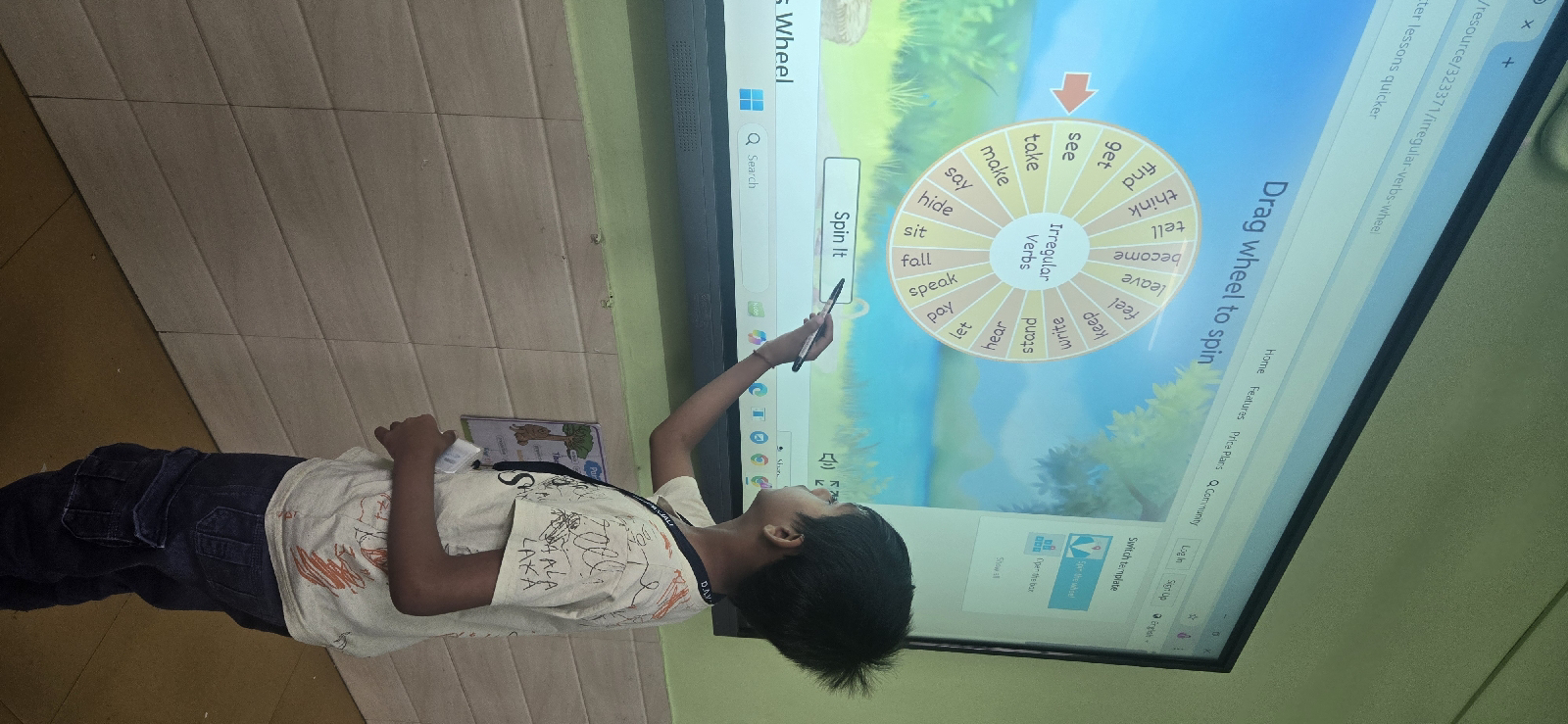
Class 2- Verbs game

Image
In this fun and interactive grammar session, students participated in an online verb game focused on reinforcing their understanding of past tense forms of verbs. The activity was designed around a spinning wheel game, where the present form of a verb would appear randomly on the screen as the wheel stopped spinning. As each verb appeared (e.g., run, eat, go, play, etc.), students were invited to: Say the past form of the verb aloud (e.g., ran, ate, went, played) The game was played in small groups, with each student getting a turn to "spin" the virtual wheel. Points were awarded for correct answers, encouraging participation and friendly competition. The activity included both regular and irregular verbs, helping students practice a wide range of vocabulary and internalize common patterns.

Class 2- Fiction and non fiction

Image
In this engaging literacy-based activity, students explored the difference between fiction and non-fiction texts through a hands-on book sorting task. A mixed set of books was placed on a table, containing both storybooks (fiction) and informational texts (non-fiction) covering topics like animals, space, famous people, and more. Children worked in small groups to: Examine the covers and content of each book Identify key features such as illustrations, real photographs, story elements, facts, and indexes Discuss their observations with group members Sort the books into two categories: Fiction and Non-Fiction